For most homes, the best approach is a mix: gentle, lower-toxicity products for everyday cleaning, and stronger products only for the specific jobs that need them, used with good ventilation and never combined. Neither category is automatically "good" or "bad." What matters is matching the product to the surface and the mess, and reading the label every time. Here is how the two compare and how to decide what belongs under your sink.
What people mean by natural cleaners
"Natural" usually refers to simple ingredients such as white vinegar, baking soda, castile soap, lemon juice and plant-based cleaning products. It is worth knowing that "natural" is a marketing word, not a regulated standard, so two products with the same label can be very different. Check the ingredient list rather than the front of the bottle.
Simple ingredients handle a lot of everyday work well:
- Diluted dish soap and warm water cleans most sealed countertops, cabinet fronts, painted trim and sealed floors.
- White vinegar diluted with water cuts mineral spots on glass, chrome fixtures and shower doors.
- Baking soda paste is a mild scrub for sinks, tubs and baked-on spots in pans.
- Microfiber cloths pick up dust and a lot of grime with nothing but water.
Their main limits are strength and speed. Heavy grease, built-up soap scum and mold usually take more scrubbing or a more targeted product.
What conventional cleaning products do well
Conventional cleaners are formulated for specific jobs: degreasers for range hoods, disinfectants for bathrooms, oven cleaners for baked-on carbon, and mold and mildew removers for grout. When you need a surface disinfected, a registered disinfectant used exactly as directed, including the contact time on the label, is the reliable way to do it.
The tradeoffs are fumes, skin irritation and the risk of misuse. Some products should never be mixed. Bleach combined with ammonia or with acids, including vinegar, releases harmful gases. Strong products can also etch or dull surfaces they were not made for.
Surfaces where natural is not the safe choice
A common mistake is assuming a natural ingredient is gentle on everything. Vinegar and lemon are acidic, and that matters:
- Natural stone such as granite, marble and travertine can etch or lose its sealant with acidic cleaners. Use a pH-neutral stone cleaner.
- Hardwood floors do best with a cleaner made for the finish and as little water as possible.
- Grout can be weakened by repeated acidic cleaning.
- Some stainless steel and specialty finishes call for the manufacturer's recommended product.
When in doubt, check the care instructions for the surface, then test any product on a hidden spot first.
Indoor air, kids, pets and allergies
Many households want lower-toxicity products because someone has asthma, allergies or sensitive skin, or because small children and pets spend time on the floors. Fragrance is often the biggest irritant, so fragrance-free products are worth considering even if you use conventional cleaners. Whatever you use, open a window or run the bathroom fan, keep products in their original containers, and store them where children and pets cannot reach.
A practical way to set up your cleaning kit
You do not need a cabinet full of bottles. A small kit covers most homes:
- A gentle all-purpose cleaner or diluted dish soap for daily surfaces.
- A glass cleaner or vinegar solution for mirrors and fixtures (kept away from stone).
- A pH-neutral cleaner if you have stone counters or tile.
- One disinfectant for bathrooms and high-touch spots when someone is sick.
- A degreaser for the stovetop and range hood.
- Plenty of clean microfiber cloths, washed separately without fabric softener.
Use the gentle products by default, and reach for the stronger ones only for the job they were designed for.
How Reina's Cleaning handles product choices
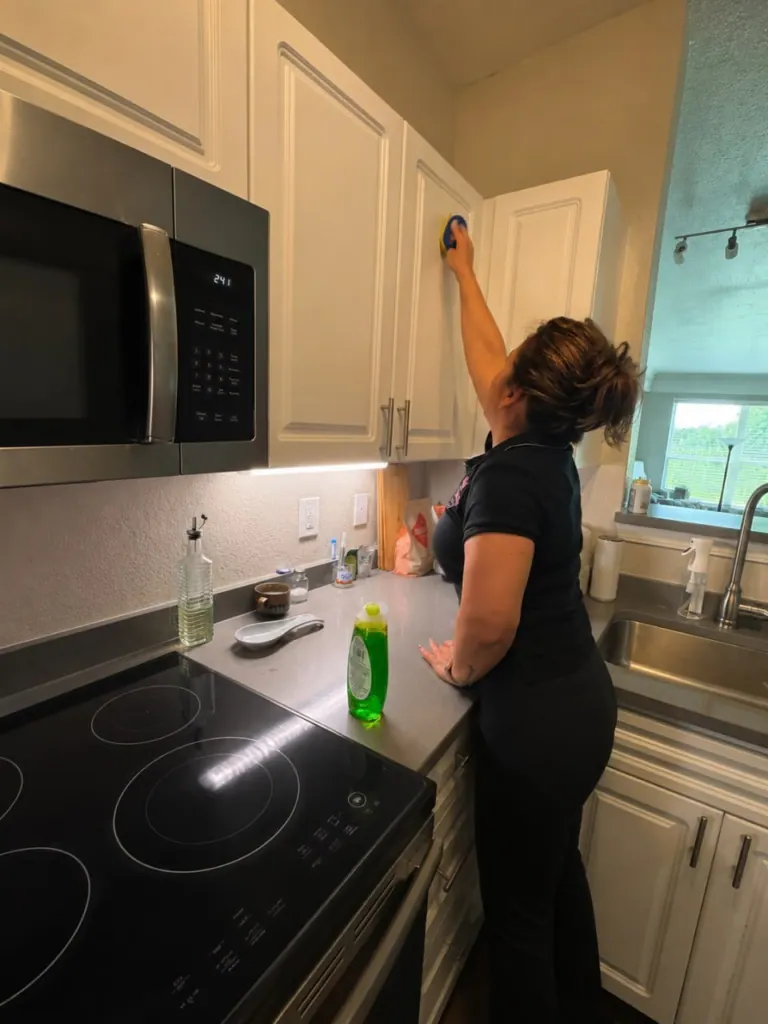
Every home is different, so we ask about your preferences before we start. If lower-toxicity products are important to you, our eco-friendly house cleaning uses non-toxic products whenever possible and avoids harsher products when a suitable alternative exists. Let us know about pets, allergies, stone counters or floors that need special care, and we will plan around them. The same applies to regular house cleaning visits: tell us what you prefer and what you want us to avoid.
The short answer
Use the gentlest product that does the job, match it to the surface, never mix products, and keep the stronger ones for the tasks that need them. If you would like a cleaning plan built around the products you are comfortable with, call Reina's Cleaning at 720-830-5364 or request a free quote.